
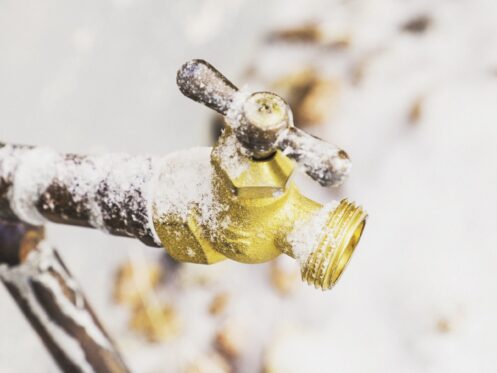
Outdoor plumbing can suffer damage when winter arrives. It’s important to come up with a plan to stop freezing temperatures from causing frozen spigots and pipes. A few simple tasks now can spare you soggy lawns, shattered pipes, and emergency service calls in the dead of winter or first thing in the spring. At Summit Heating, A/C, Plumbing & Electrical, in Denver, CO, our local plumbers guide you through each step, so you won’t face frozen valves or hidden leaks when cold snaps hit.
Drain and Store Garden Hoses
Before the first freeze, detach hoses from each outdoor faucet and drain the water out of them. Even a small amount of moisture trapped inside a hose can expand and split the rubber when temperatures drop. Coil each hose loosely and store it in a dry and warm location. If you have quick-connect fittings, detach them and store extra couplings alongside the hoses. This process keeps metal connectors from corroding or freezing in place. When winter ends, you’ll be able to grab your equipment quickly and use it without issue.
Wrap and Shield Exposed Pipes
Sections of pipes running along exterior walls or through unheated crawlspaces face the greatest risk of freezing. These areas of your plumbing system should be insulated. We can ensure insulation is installed snugly around each pipe, sealing the seam with vinyl plumber’s tape. In corners or narrow cavities where preformed sleeves won’t fit, it may be necessary to use closed-cell spray foam in gaps, creating a continuous barrier against cold air. This process prevents water inside pipes from expanding and cracking the metal or plastic.
Upgrade to Frost-Proof Spigots
If your outdoor spigots sit within a heated space, like inside a utility room or closet, you may already have frost-proof valves. For hose bibs mounted on exterior walls, consider swapping them for freeze-resistant models that keep the shut-off deeper inside your home, where it stays above freezing.
Installation involves replacing the old valve assembly and positioning the new valve rod so it sits well within the insulated interior wall cavity. This design stops water from lingering in the exposed section, where ice can build and crack the spigot. Once fitted correctly, spigots protect against cold snaps without dripping or breaking.
Protect Backflow Preventers and Irrigation Lines
If your system includes a backflow preventer to stop water from flowing backward into municipal lines, it likely sits above ground near your home’s foundation. Before frost happens, cover it with an insulated box kit made for backflow devices. These kits slip over the valves and trap heat escaping from your home, keeping the water inside above freezing.
For underground sprinkler supply lines, have a plumber blow compressed air through the system to purge any lingering water. This winterization process costs less than replacing cracked valve bodies come spring. Completing these tasks before the cold weather sets in means your irrigation system will be intact when you turn it back on in the spring.
Drain and Protect Fountain and Pond Lines
Fountains and backyard ponds add charm but pose a risk when frost occurs. Before temperatures drop, switch off pumps and drain all water from hoses and pipes. If you have a self-circulating fountain, disconnect its tubing and store the pump indoors. For ponds, install a pond heater.
Any exposed plumbing leading to filtration systems benefits from foam insulation or a hard-shell cover rated for outdoor use. This barrier shields PVC fittings and prevents cracking when water freezes inside. By winterizing these decorative elements, you preserve pumps, tubing, and seals, so spring startup becomes as simple as refilling, reconnecting, and plugging back in. You won’t deal with broken parts or surprise cleanup.
Plan for Spring Reactivation and Inspection
Winter prep isn’t complete without thinking ahead to spring. As you wrap up hose storage and pipe insulation, jot down locations of every protected fixture and covered pump. When the last frost passes, revisit each area to remove foam sleeves, faucet covers, and pump shields. Before you turn water back on, visually inspect pipe joints and valve seats for any hint of frost damage.
Open each spigot slowly and watch for a steady flow of water. The presence of any sputtering or drips can point to a hairline crack that needs attention. Flushing irrigation lines or fountain tubing clears out debris stirred up in winter. Finally, schedule a professional check of backflow preventers, spigot assemblies, and any buried valve boxes.
Seal Wall Penetrations and Foundation Gaps
Every hole where a pipe enters your home is an invitation for cold drafts. Walk around your foundation and spot any openings around supply lines, drain vents, or electrical conduit. Fill cracks with outdoor-rated acrylic caulk or expanding spray foam. Around PVC drain pipes, use a silicone-based sealant that grips both plastic and masonry walls.
These patches block wind from chilling your indoor walls and avoid sudden cold snaps, driving frost into spots you didn’t expect. In tight crawlspaces, cutting rigid foam panels to dab around pipe entries adds an extra layer of defense without blocking access panels.
Cover Above-Ground Equipment
If you have an outdoor pressure regulator or an exterior water softener drain line, wrap these components in weatherproof insulation jackets. These jackets fasten tightly and fit over oddly shaped assemblies better than straight tubes of insulation.
For meters or outdoor faucets that can’t be removed, slip foam covers over each fixture. Look for models with built-in flaps that seal around irregular contours. That extra protection stops moisture from settling on metal surfaces and prevents ice from forming inside valves. When spring arrives, simply pull off the covers and store them.
Monitor Temperatures and Act Early
Even with thorough prep, an unexpected cold front can increase your risk of freezing outdoor pipes and fixtures. Position a small digital thermometer near vulnerable plumbing runs or inside an unheated storage area. If you see readings dropping, you can be proactive about protecting your fixtures and pipes until temperatures rise again.
You may also turn on a slow drip at an exterior faucet to keep water flowing through at-risk areas so freezing doesn’t occur.
Schedule a Professional Winter Checkup
Hiring a licensed plumber to perform a pre-winter inspection gives an expert’s eye on every connection, valve, and fitting. We will test drainage, tighten loose pipe straps, and replace worn insulation sleeves before the winter season sets in.
A professional can also spot areas where condensation has the potential to freeze and recommend targeted fixes. While you can handle the basics, such as hose drainage and frost-proof covers, our visit brings confidence that no detail has been overlooked.
Wrap Up Your Winter Preparation
Getting your outdoor plumbing ready for cold weather pays off by preventing broken pipes and water damage. Beyond hose-bib covers and line drainage, Summit Heating, A/C, Plumbing & Electrical offers seasonal leak checks, pipe insulation installation, and emergency pipe repairs to ensure your system remains strong, regardless of how low temperatures fall. Protect your exterior plumbing pipes and fixtures today and enjoy reliable water flow. Give Summit Heating, A/C, Plumbing & Electrical in Denver a call to schedule your winter plumbing inspection and maintenance.