
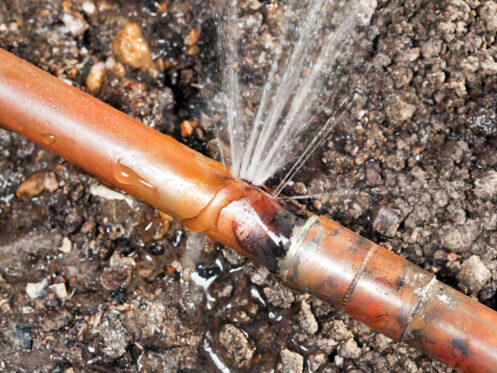
A burst pipe in your Denver, CO home can cause extensive damage in minutes. It’s important that you know how to handle a burst pipe to minimize damage. There are also steps that you can take to prevent your pipes from bursting or leaking in the first place. Our team at Summit Heating, A/C, Plumbing & Electrical is here to help you with things like routine plumbing maintenance and emergency repairs.
The Dangers of Burst Pipes
Burst pipes can quickly release a few gallons of water per minute. In some instances, a burst pipe will lead to thousands of gallons of water emptying into your home. Damage can be extensive and include structural problems, electrical issues, and water contamination. You may need to replace flooring, walls, or furniture after a burst pipe.
Whenever moisture is present in your home, mold growth is a concern. Mold exposure can wreak havoc on your health. Many individuals experience frequent headaches, dizziness, nausea, allergies, and breathing problems from mold exposure. If water finds its way under flooring and into walls, it doesn’t take long to experience a large mold problem. Remediation can be expensive. Depending on the severity of the mold, you may need to leave your home while work is being performed.
Unfortunately, mold is something that many homeowners’ policies do not cover. That’s because it is considered an ongoing issue rather than something sudden. You’ll have to pay for mold remediation and renovations out of your pocket. It’s better to avoid leaks and burst pipes whenever possible.
Immediate Actions to Take
Once you have discovered a pipe has burst, you’ll need to take fast action to prevent extensive damage. Shut off the water to that area of your home and to your entire residence. Make sure you and your family members know where this valve is located prior to a plumbing emergency. You should cut power at your breaker panel if there are electrical lines near the leak that pose a risk. Use towels to contain the water. Call a professional for emergency plumbing repairs.
Document what’s going on in case you need to submit this information to your insurance company. Take photos of the burst pipe and any water damage that is present. Retain information that you receive from a plumber, including estimates and bills.
Professionals can use pipe clamps, rubber patches, hose clamps, epoxy, and other materials to repair leaks or burst pipes. In many scenarios, replacing the affected section of pipe will be necessary. The goal is to perform a lasting repair that eliminates the worry that a leak will occur again in that spot.
You should avoid a DIY repair. Professionals use specialized equipment like cameras to determine the exact location and severity of a leak. A homeowner may miss damage, leading to future problems. If there is a burst pipe on your property outside your home, professionals may need to excavate the area. Pipelining is a repair method that can eliminate the need for digging, but this should be done by an experienced professional.
The Cleanup Effort
Move any furniture, devices, or belongings away from the water. You will need to remove any carpet that has soaked through. This includes padding in the case of severe leaks. It’s nearly impossible to completely dry these materials out, which can promote the growth of mold. Throw away any porous items that will have difficulty drying. Non-porous items can usually be wiped down and saved.
You should dry the area using large fans. Direct the fans at the most saturated areas. Continue this process for at least 24 to 48 hours, even if the area looks dry. Mold can grow with even a very small amount of moisture. You can monitor humidity in the area where the pipe burst to ensure it comes back down to a normal level. Ideally, relative humidity in your home should be between 30% and 50%.
Preventing Burst Pipes
The best way to avoid damage to your home is to prevent a burst pipe or plumbing leak. Schedule periodic inspections of your plumbing system. This helps our team spot issues early before they develop into catastrophic problems. Keep up with routine maintenance as well, including preventive drain cleaning. This keeps your pipes and drains clear so they aren’t under excessive amounts of pressure.
Keep your home warm throughout the winter months. If the temperature inside your home drops below 50 degrees Fahrenheit, your pipes are at risk of freezing. When ice forms inside your pipes, it causes expansion and stress. Even if you’re going on vacation and are gone for several days, maintain an ideal interior temperature. Invest in a smart thermostat so you can monitor the conditions inside your home remotely.
Insulate any exposed pipes in your home. You can use foam sleeves that are easy to cut and place over pipes. Spray foam insulation fills small gaps around your pipes and does an excellent job of retaining heat. Consider insulating your water heater to maintain the temperature of the water inside your pipes and unit.
Winterize your outdoor spigots before temperatures drop. If water freezes inside these fixtures, it can cause damage, or a pipe can burst inside your home. Install insulating covers on your fixtures or upgrade to frost-proof spigots. By adjusting the design and insulation level of these fixtures, it becomes difficult for ice to form inside.
Installing leak detectors around your home helps you stay informed about what’s going on. If water is pooling near the detector, it will provide an audible alert. If you’re using a smart device, you’ll receive a notification on your phone or tablet. If you’re away from home, you can take appropriate steps quickly to prevent damage. If you allow a burst pipe to leak water for several hours, you’re walking in the door to a catastrophe. Provide a friend or neighbor with a way to access your home on your behalf. If you’re far from home, their support can help minimize damage.
Spotting Signs of a Potential Burst Pipe
It’s important to notice certain signs that can indicate a burst pipe is likely to occur soon. Taking prompt action prevents this disaster. Check for condensation or ice formation on pipes, especially when the weather is very cold outside. Bulging or leaking pipes should be addressed quickly.
A clog can raise the risk of bursting. Pay attention to gurgling sounds coming from your drains. Bad odors can indicate clogs as well. Look for water stains on ceilings or walls that indicate a leaky and compromised pipe. Fluctuations in water pressure can also indicate there is a problem with your plumbing system that can result in a burst pipe.
In many cases, a homeowner can’t predict that their pipe is about to burst. However, routine inspections and maintenance can help decrease the risk of this scenario occurring. Our team at Summit Heating, A/C, Plumbing & Electrical has been helping Denver homeowners since 1998. Count on us for new plumbing installations, routine maintenance, and emergency repairs. Contact us today at Summit Heating, A/C, Plumbing & Electrical for plumbing support in Denver.